
Compressed air systems are considered the “hidden powerhouse” of industrial production. However, one of the biggest and often overlooked problems with these systems is humidity (moisture). Humidity in compressed air can damage equipment, reduce production quality, and cause significant financial losses.
In this blog post, we explain in detail why humidity in compressed air is dangerous and how to prevent it.
Where Does Humidity in Compressed Air Come From?
Atmospheric air naturally contains water vapor. As the compressor compresses the air:
The air temperature rises
More water vapor enters the compressed air system
When the air cools, this vapor turns into condensate (water)
Resulting in:
In piping
In air tanks
Water collects in tools and equipment
The Dangers of Moisture in Compressed Air
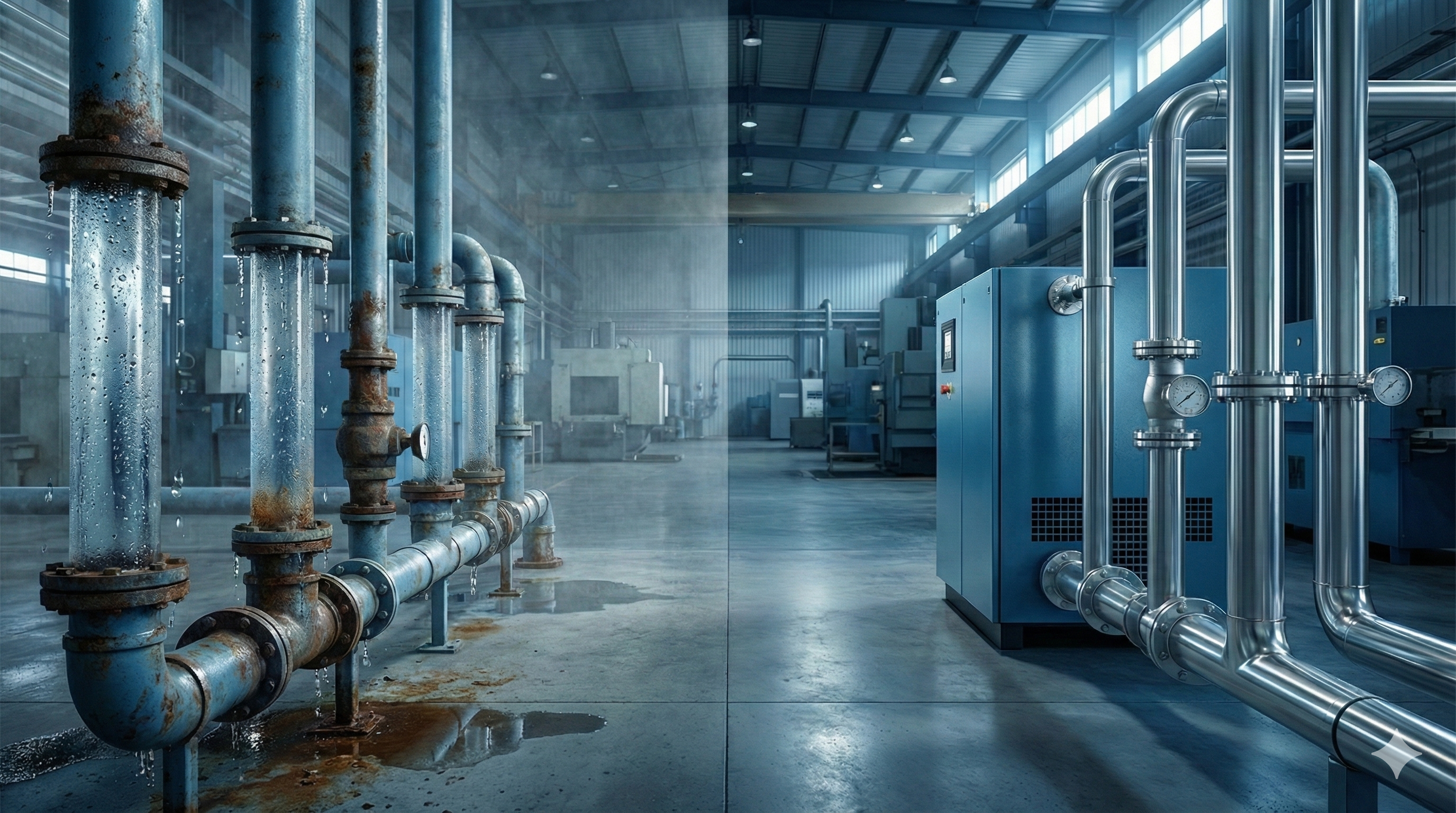
Equipment Corrosion
Moisture:
Causes metal pipes to rust
Failure of valves and fittings
Shortens the life of compressor components
This means additional service costs and production downtime.
Product Quality Deterioration
Humidity poses a serious risk, especially in these industries:
Food and beverage industry
Paint and surface coatings
Electronics manufacturing
Pharmaceuticals
Humid air:
Causes blistering and spots in paint
Causes contamination in the product
Leads to violation of quality standards
Pneumatic Tool Failure
Compressed air tools:
Not lubricated properly
Experience freezing and seizing
Failures more quickly
This means both safety risks and work delays.
Energy Losses and Increased Costs
A humid system:
Uses more energy
Filters fill up quickly
Compressor is loaded more heavily
Result: increased electricity costs
How to Prevent Humidity in Compressed Air?
1. Using Air Dryers
The most effective solution against humidity:
Refrigeration type dryers – for general industrial use
Adsorption type dryers – for areas requiring high quality and dry air
These dryers dry the air by lowering the dew point.
2. Condensate Separators and Automatic Drains
Condensate is removed from the system in a timely manner
Water does not accumulate in the pipes
The system operates more stably
3. Proper Filtration System
A quality filter system:
Effectively separates water
Oil
Dust particles
This both protects the equipment and improves air quality.
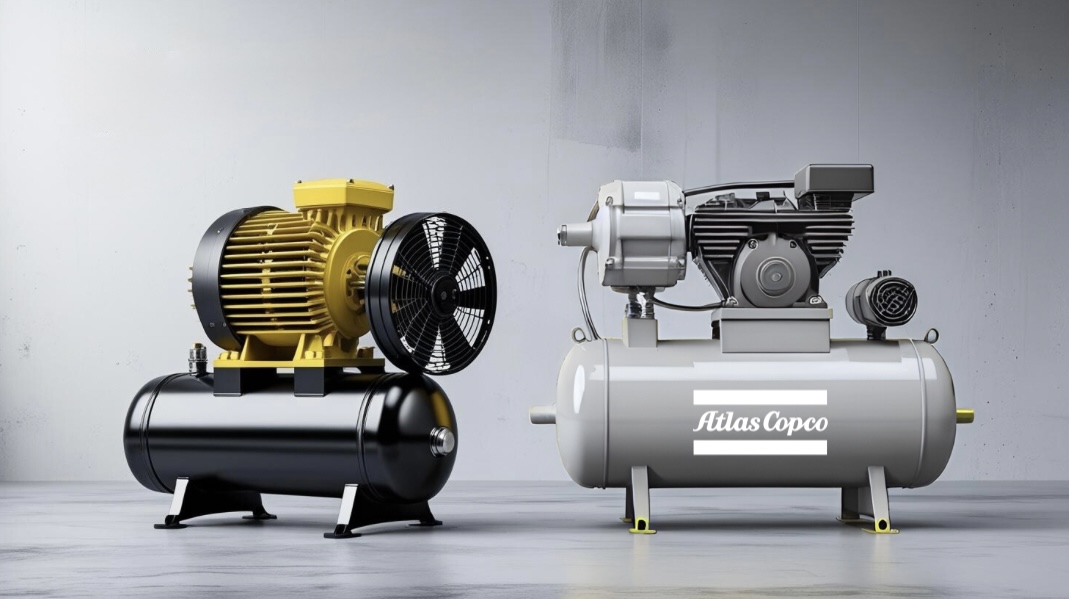
4. Proper Compressor Selection and Design
The same system is not suitable for every area:
Air flow (m³/min)
Pressure (bar)
Area of use
must be analyzed correctly. Professional design minimizes the risk of humidity.
Conclusion
Humidity in compressed air:
Damages equipment
Reduces product quality
Increases energy and service costs
All of these risks can be avoided with the right dryer, filtration, and system selection